Are you considering opening a company in Orlando? Navigating the complexities of starting a business can be daunting, but with the right guidance, it can be a smooth and successful venture. Orlando, Florida, offers a vibrant business environment with numerous opportunities for entrepreneurs. This comprehensive checklist will guide you through each essential step, ensuring you’re well-prepared to launch your company in this dynamic city. From developing a solid business plan to securing the necessary licenses and permits, this guide provides the knowledge and resources you need to thrive.
This article provides a clear, actionable roadmap for starting a company there. You’ll learn how to choose the right business structure, comply with legal requirements, navigate banking and funding options, and protect your business with essential insurance coverage. By following this step-by-step guide, you’ll be well-equipped to establish a successful and sustainable business there.
Summary
Choosing the Right Business Structure in Florida: LLC, Corporation, and More
Securing Essential Licenses, Permits, and Tax IDs for Orlando Businesses
Navigating Business Banking and Funding Options in Central Florida
Understanding Registered Agent Responsibilities and Requirements in Florida
Essential Business Insurance Coverage for Protecting Your Orlando Company
Step-by-Step Guide: Opening a Company in Orlando
Embarking on the journey of starting a company there requires careful planning and execution. This step-by-step guide will help you navigate the process efficiently. First, you need to develop a comprehensive business plan. This plan should outline your business goals, target market, financial projections, and strategies for success. A well-structured plan is crucial for attracting investors and securing funding.
Next, you’ll need to choose a business structure. Common options include sole proprietorship, partnership, limited liability company (LLC), and corporation. Each structure has different legal and tax implications; therefore, consult with a legal professional or a company like Prezzo Consulting to determine the best fit for your business needs. Consider factors such as liability protection, tax obligations, and administrative requirements.
After selecting your business structure, register your business with the Florida Department of State, which involves filing the necessary paperwork and paying the required fees. You will need to obtain an Employer Identification Number (EIN) from the IRS, even if you don’t plan to hire employees immediately. This number is essential for tax purposes and for opening a business bank account. Then, secure the necessary licenses and permits for your specific industry. Requirements vary depending on the nature of your business and its location within Orlando.
Opening a business bank account is essential for managing your finances. Keep your personal and business finances separate to maintain accurate records and protect your personal assets. You should also establish an accounting system to track income and expenses, which will be crucial for tax preparation and financial analysis. To simplify this process, consider using accounting software.
Finally, market your business effectively to attract customers. Develop a marketing strategy that includes online and offline channels, such as social media, local advertising, and community events. Building a strong brand presence is essential for long-term success. What’s more, networking with other business owners and professionals can also provide valuable opportunities for growth and collaboration. This thorough process ensures a solid foundation for your business venture.
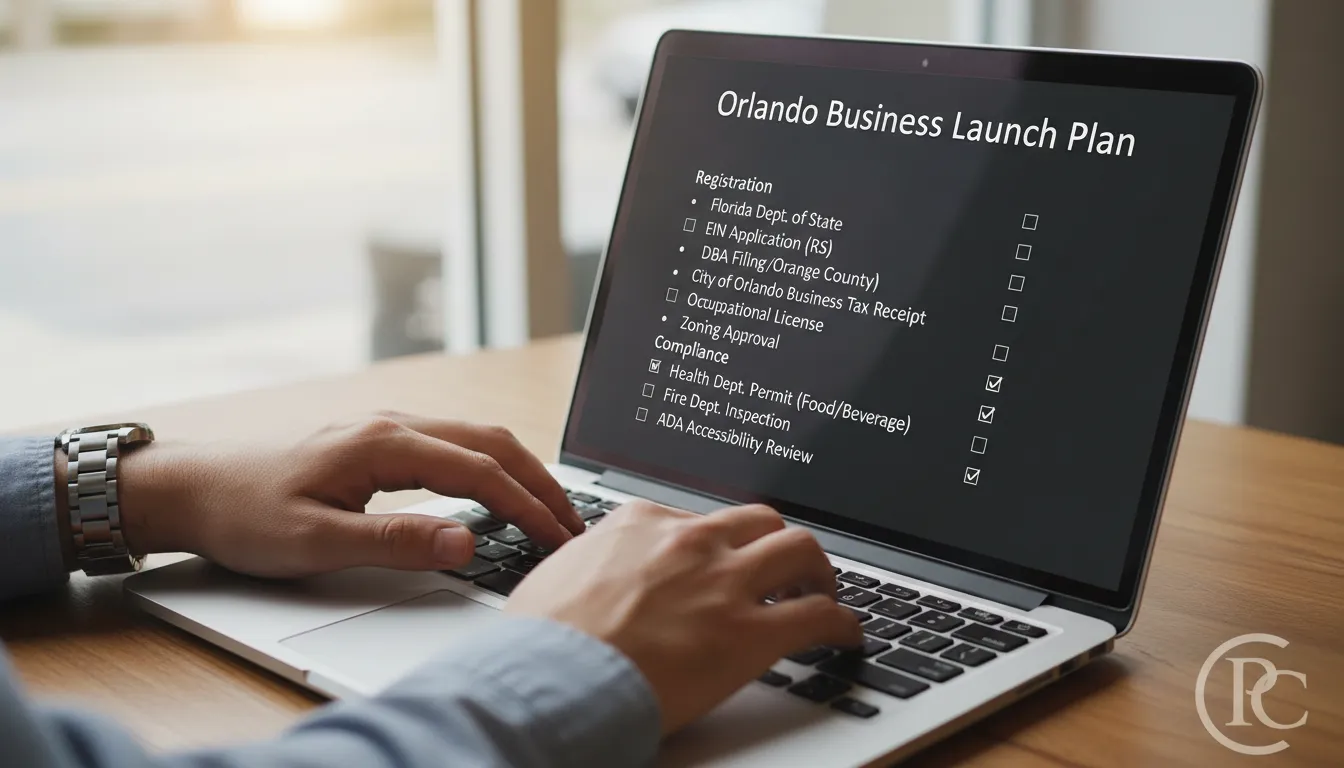
Choosing the Right Business Structure in Florida: LLC, Corporation, and More
Selecting the correct business structure is a foundational step when establishing your enterprise in Florida. The structure you choose impacts your personal liability, taxation, and administrative burden. Each option presents unique advantages and disadvantages, making it crucial to carefully evaluate your specific needs and long-term goals before deciding. Consulting with professionals, such as those at Prezzo Consulting, can provide valuable insights tailored to your circumstances.
A Limited Liability Company (LLC) is a popular choice for many small business owners due to its simplicity and liability protection. It separates your personal assets from business debts and lawsuits, offering a significant layer of security. An LLC provides pass-through taxation, meaning profits and losses are reported on your personal income tax return, avoiding double taxation. Forming an LLC involves filing articles of organization with the Florida Department of State and complying with ongoing requirements.
Corporations, conversely, are more complex structures that may be suitable for larger businesses or those seeking to raise capital. There are two main types: S corporations and C corporations. C corporations offer the benefit of raising capital through the sale of stock, but profits are subject to double taxation—at the corporate level and again when distributed to shareholders. S corporations also offer liability protection, but profits and losses are passed through to the owners’ personal income.
Beyond LLCs and corporations, other business structures exist, such as sole proprietorships and partnerships. Sole proprietorships are the simplest to form but offer no liability protection, while partnerships involve two or more individuals sharing in the business’s profits and losses. The best structure depends on factors such as the nature of your business, your risk tolerance, and your financial objectives. Thoroughly researching these options will inform a sound decision, crucial for successfully starting a business there. This analysis should be made with professional assistance.
Here’s a list of factors to consider when selecting a business structure:
Liability protection: How much protection do you need for your personal assets?
Tax implications: What are the tax advantages and disadvantages of each structure?
Administrative burden: How much paperwork and compliance are you willing to handle?
Future growth: Does the structure support your long-term growth plans?
Capital needs: Will you need to raise capital from investors?
Legal Requirements: Registering Your Business Name and Filing Paperwork with the Florida Department of State
After settling on a business structure, the next crucial step involves ensuring your chosen business name complies with Florida’s regulations and is properly registered. To that end, check the availability of your desired business name through the Florida Department of State’s Division of Corporations website. It’s important to perform a thorough search to avoid any potential conflicts with existing businesses. Prezzo Consulting recommends that you consider trademark implications when choosing a name and ensure alignment with your brand.
Once you’ve confirmed the availability of your name, you must register it with the Florida Department of State. The specific forms and procedures vary depending on your business structure. Corporations and LLCs typically file Articles of Incorporation or Articles of Organization, respectively. These documents officially establish your business entity in the state. It’s essential to accurately complete all required fields and provide the necessary information, such as the registered agent’s name and address, the business’s purpose, and the names and addresses of the business owners or managers.
Filing the necessary paperwork with the Florida Department of State is a critical step. Ensure all documents are accurately completed and submitted with the required filing fees. The Florida Department of State offers online filing options, which can streamline the process. Give thought to these factors during the registration:
Registered Agent: Appoint a registered agent who will receive legal and official documents on behalf of your business.
Principal Place of Business: Provide the physical address of your business location.
Business Purpose: Clearly state the nature of your business activities.
Management Structure: Define the roles and responsibilities of owners, members, or directors.
Effective Date: Specify the date your business officially comes into existence.
Following submission, the Florida Department of State will review your documents. If everything is in order, they will issue an official certificate of status, which serves as proof of your business’s legal existence. Keep this certificate in a safe place, as it will be required for various business-related activities, such as opening a bank account and obtaining licenses and permits. Seeing that the process might seem overwhelming, seek guidance from professionals to ensure compliance.

Securing Essential Licenses, Permits, and Tax IDs for Orlando Businesses
Navigating the licensing and permitting landscape is crucial for legally operating in Orlando. These requirements vary based on your industry, business structure, and specific activities. Ignoring these steps can lead to fines, legal issues, or even the forced shutdown of your operations. Prezzo Consulting can guide you through this process to ensure full compliance.
First, obtain a Federal Employer Identification Number (EIN) from the IRS. This is your business’s tax ID and is essential for hiring employees, opening a bank account, and filing federal taxes. Most businesses, except for sole proprietorships without employees, require an EIN. The IRS website offers straightforward instructions for applying online.
Next, determine the state and local licenses and permits required for your business. Florida’s Department of Business and Professional Regulation (DBPR) oversees many professional licenses. Common requirements include:
Business Tax Receipt (BTR): Obtained from the City of Orlando, required for most businesses operating within city limits.
Professional Licenses: Required for specific professions like healthcare, construction, and cosmetology, administered by DBPR.
Health Permits: Necessary for businesses involved in food service, ensuring compliance with health and safety standards.
Sign Permits: Regulate the size, placement, and type of signage displayed by your business.
Building Permits: Required for any construction, renovation, or alteration of commercial properties.
Compliance with state sales tax regulations is also essential. Register with the Florida Department of Revenue to obtain a sales tax permit if you sell taxable goods or services. Understanding sales tax rates, collection procedures, and filing deadlines is critical to avoid penalties. This aspect is one where the team at Prezzo Consulting can provide invaluable assistance, as they specialize in helping businesses navigate complex tax laws and regulations.
Finally, make sure to maintain accurate records of all licenses, permits, and tax-related documents. Keep them readily accessible for inspections and audits. Renew licenses and permits promptly to avoid any lapses in authorization. A proactive approach to compliance ensures the long-term success and stability of your company.
Navigating Business Banking and Funding Options in Central Florida
Securing the right banking and funding is crucial for any new business. Central Florida offers a diverse range of options, from large national banks to local credit unions, each with its own advantages. When choosing a bank, consider factors like account fees, interest rates, online banking capabilities, and the availability of business loans. Research different banks to find one that aligns with your specific needs. Also, many banks offer specialized services for businesses, such as merchant services and payroll processing.
Several funding options are available to entrepreneurs in Central Florida. Small Business Administration (SBA) loans are a popular choice, offering government-backed guarantees that can make it easier to qualify. Venture capital firms and angel investors are also active in the region, providing funding in exchange for equity. Consider crowdfunding platforms as an alternative funding source. Furthermore, the State of Florida offers various grant and incentive programs designed to support new businesses.
Here are some key steps to take when exploring banking and funding options:
Shop Around: Compare rates, fees, and services from multiple banks and lenders.
Prepare a Business Plan: A well-written business plan is essential for attracting funding.
Understand Loan Terms: Carefully review the terms and conditions of any loan before signing.
Build a Relationship with Your Banker: A strong relationship can be invaluable for future financial needs.
Explore Government Programs: Investigate state and local incentive programs that can provide financial assistance.
Navigating the financial landscape can be complex; therefore, seeking professional advice from firms like Prezzo Consulting can be beneficial. Fully understanding these options will contribute to the long-term financial health and success of your new venture. Keep these steps in mind during this important phase.

Understanding Registered Agent Responsibilities and Requirements in Florida
In Florida, a registered agent is a crucial component for any business entity. This agent acts as the official point of contact between the company and the state, ensuring important legal and tax documents are received promptly. Selecting a reliable registered agent is essential for maintaining compliance and avoiding potential penalties. Prezzo Consulting advises clients to carefully consider their options when choosing one, as this decision can significantly impact their business operations.
The primary responsibilities of a registered agent in Florida include receiving official correspondence from the Florida Department of State, accepting service of process in the event of a lawsuit, and forwarding these documents to the appropriate individuals within the company. The registered agent must maintain a physical street address in Florida, known as the registered office, and be available during regular business hours. Note that a post office box is not acceptable as a registered office address.
To qualify as a registered agent in Florida, an individual must be a Florida resident with a physical street address in the state, or a business entity authorized to transact business in Florida. The registered agent must provide written consent to serve in this capacity. Failure to maintain a registered agent in good standing can result in administrative dissolution of the company by the state.
When you are considering starting a company in Orlando, it’s vital that the registered agent is diligent in their duties. Consider the following requirements and responsibilities for the person or entity acting as the registered agent:
Maintaining a physical presence in Florida.
Being available during normal business hours.
Promptly receiving and forwarding legal and official documents.
Ensuring confidentiality and security of sensitive information.
Staying informed about changes in Florida business laws.
Choosing a reliable registered agent ensures that the company remains compliant with Florida state laws and regulations. The agent must be proactive in their communication and responsive to the needs of the business.
Essential Business Insurance Coverage for Protecting Your Orlando Company
Securing the right insurance coverage is paramount for protecting your Orlando company from unforeseen risks and liabilities. Adequate insurance acts as a safety net, shielding your business from potentially devastating financial losses that could arise from accidents, lawsuits, or natural disasters. This section outlines the essential types of business insurance you should consider when considering business formation in Orlando to safeguard your assets and ensure business continuity.
General Liability Insurance: This foundational coverage protects your business from financial losses resulting from bodily injury or property damage to third parties. For instance, if a customer slips and falls in your store, general liability insurance can cover their medical expenses and any legal fees if they decide to sue. It’s a broad protection against common risks.
Commercial Property Insurance: This covers damages or losses to your business property, including buildings, equipment, and inventory, due to events like fire, theft, or vandalism. Ensure the policy adequately covers the replacement cost of your assets to avoid being underinsured. Consider business interruption coverage as part of your commercial property insurance. This helps recoup lost income and cover expenses if your business is temporarily shut down due to a covered event.
Workers’ Compensation Insurance: If you have employees, this is typically required by law. It covers medical expenses and lost wages for employees who get injured or become ill on the job. This protects both your employees and your business from potential lawsuits related to workplace injuries.
Professional Liability Insurance (Errors & Omissions): If your business provides professional services or advice, this coverage protects you from claims of negligence, errors, or omissions in your services. For example, if you are a consultant and your advice leads to a client’s financial loss, this insurance can cover the resulting damages.
Cyber Liability Insurance: In today’s digital age, this is increasingly important. It protects your business from data breaches, cyberattacks, and other cyber-related risks. This coverage can help pay for expenses such as data recovery, legal fees, and customer notification costs if your business experiences a cyber incident. Besides, Prezzo Consulting recommends regular cybersecurity audits.
Conclusion
Starting a company in Orlando is an exciting endeavor that requires careful planning, diligent execution, and a comprehensive understanding of the local business landscape. By following the steps outlined in this guide, you can navigate the complexities of business formation with greater confidence and increase your chances of success. From developing a robust business plan and choosing the right legal structure to securing essential licenses and insurance, each step is crucial for establishing a solid foundation for your venture.
Remember to leverage available resources and seek professional guidance when needed. Central Florida offers a supportive ecosystem for entrepreneurs, with various organizations and consultants ready to assist you along the way. Staying informed about regulatory changes and industry best practices will also contribute to the long-term sustainability of your business.
For expert assistance in navigating the financial and compliance aspects of your business, consider reaching out to Prezzo Consulting. Their comprehensive suite of accounting, financial management, and tax consulting services can help you maintain fiscal and accounting compliance while empowering you to focus on growth and profitability. Prezzo Consulting’s tailored strategies and detailed advisory services provide clarity, control, and informed decision-making to improve your financial health and drive opportunities. With the right preparation and support, you can confidently embark on the journey of starting a company in Orlando and achieve your entrepreneurial dreams. Take the next step and ensure your business’s financial health by partnering with Prezzo Consulting for expert guidance with that process.
Frequently Asked Questions
What is the first step when opening a company in Orlando?
The initial step is developing a comprehensive business plan. This plan should detail your business goals, identify your target market, create financial projections, and outline strategies for achieving success. A well-structured plan is crucial because it helps you attract investors and secure necessary funding, setting a strong foundation for your venture.
Why is it important to choose the right business structure in Florida?
Selecting the correct business structure is foundational as it impacts your personal liability, taxation, and administrative burden. Each structure, such as an LLC or corporation, has unique advantages and disadvantages. Carefully evaluating your specific needs and long-term goals before deciding is crucial. Consulting with professionals can provide valuable insights tailored to your circumstances, ensuring you make an informed decision.
What is a Registered Agent and why do I need one?
A registered agent acts as the official point of contact between your company and the state of Florida. They receive important legal and tax documents on behalf of your business, ensuring you’re promptly informed of crucial correspondence. Selecting a reliable registered agent is essential for maintaining compliance and avoiding potential penalties, as they ensure that all official documents are received and handled appropriately.
What types of insurance coverage are essential for a new business?
Several types of insurance coverage are essential. General Liability Insurance protects against financial losses from bodily injury or property damage. Commercial Property Insurance covers damages to your business property. Workers’ Compensation Insurance is typically required if you have employees, covering workplace injuries. Professional Liability Insurance protects against claims of negligence. Finally, Cyber Liability Insurance protects against data breaches and cyberattacks, safeguarding your business from potentially devastating financial losses.